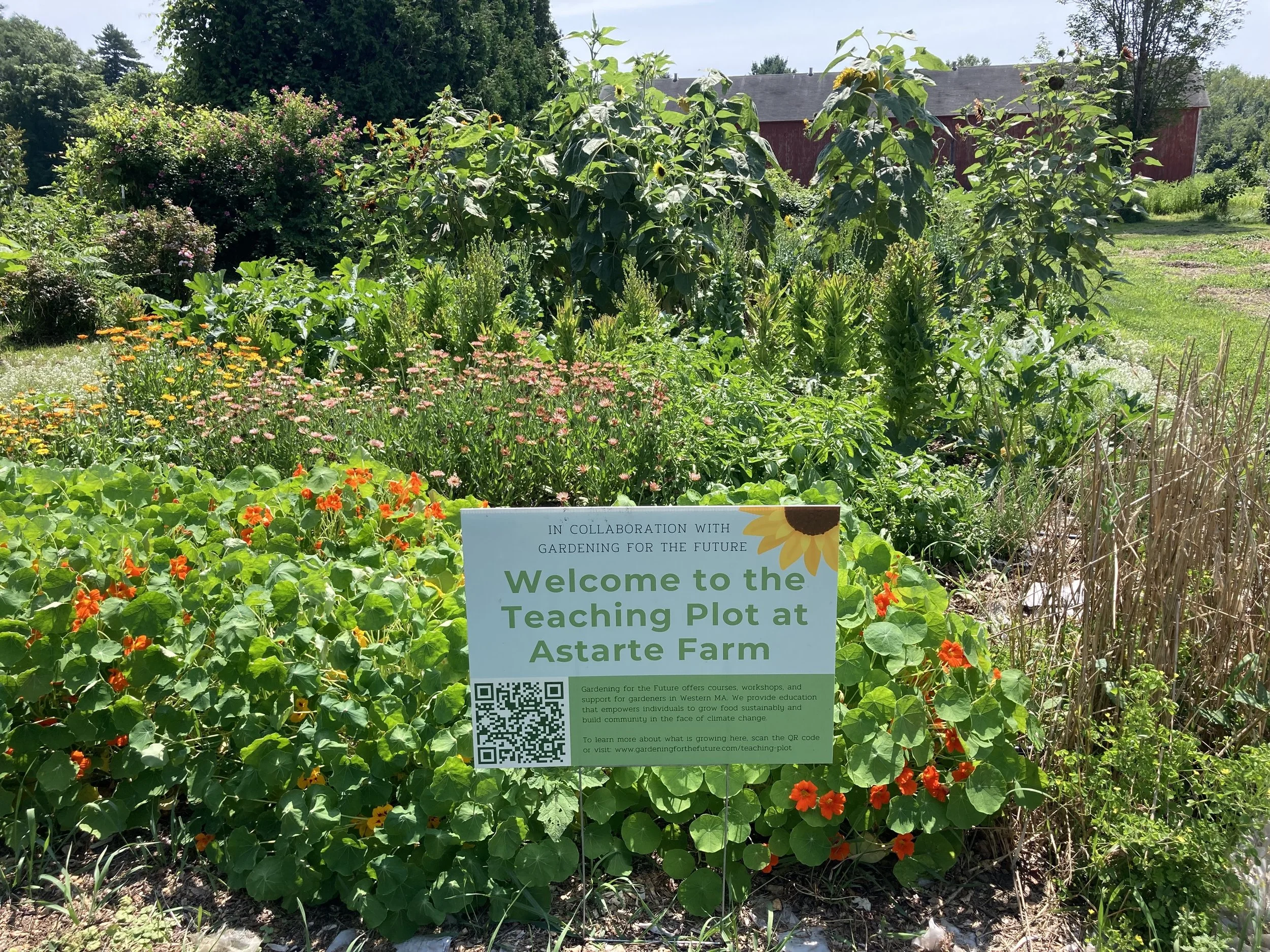
Teaching plot at Astarte Farm
Each year at Astarte Farm, we trial different no-till and climate resilient farming techniques at Gardening for the Future’s teaching plot.
Many of these growing practices are in use at Astarte Farm on a production farm scale. Here in this plot we are replicating them on a home-garden scale and getting the chance to experiment and innovate with education at the forefront. We are excited to be sharing what we are learning with gardeners and thinking about how to build a community of growers who are committed to growing resilience in the face of climate change.
Read below for different experiments we are implementing at the teaching plot this year, and you can visit the “No-till Gardening for a Resilient Future” page of our site to learn more about signing up for this course!
-
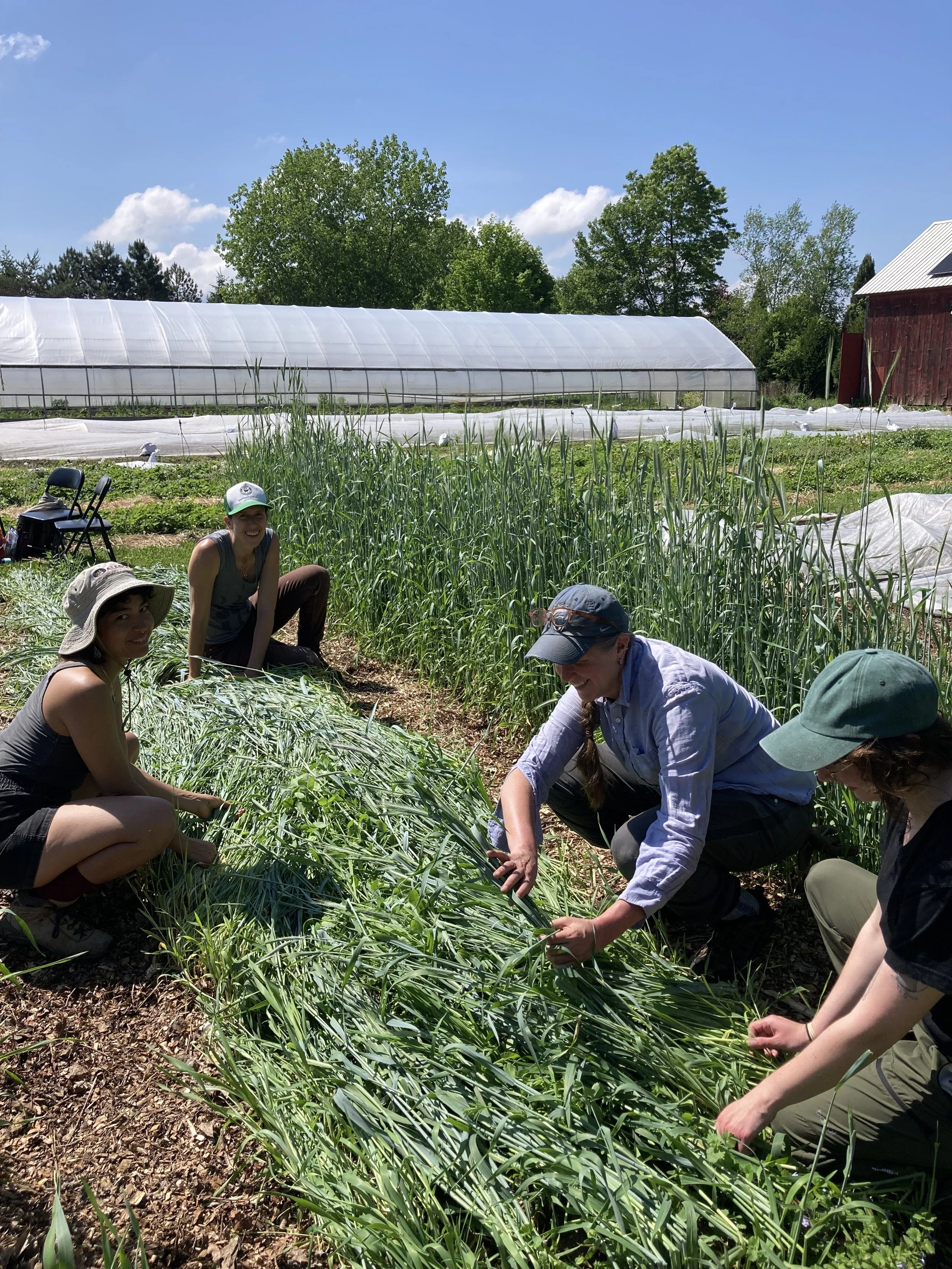
Cover Crop
We grow a variety of cover crops to help build a healthy soil through improved soil nutrition, soil structure, moisture retention and drainage.
-
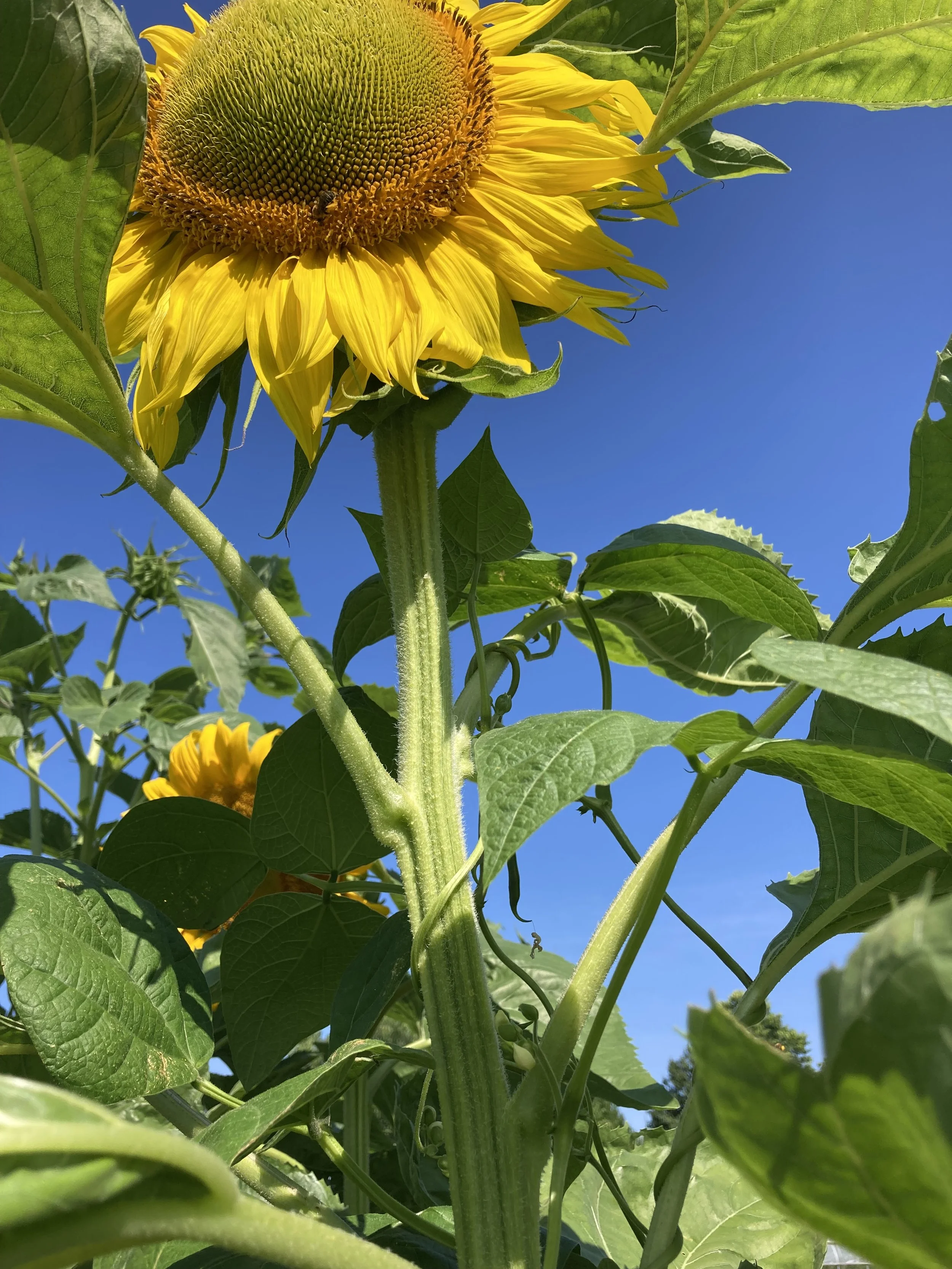
Intercropping
We grow crops next to each other that work together to create more than the sum of both parts. In this picture we are growing dry beans up sunflower stalks.
-
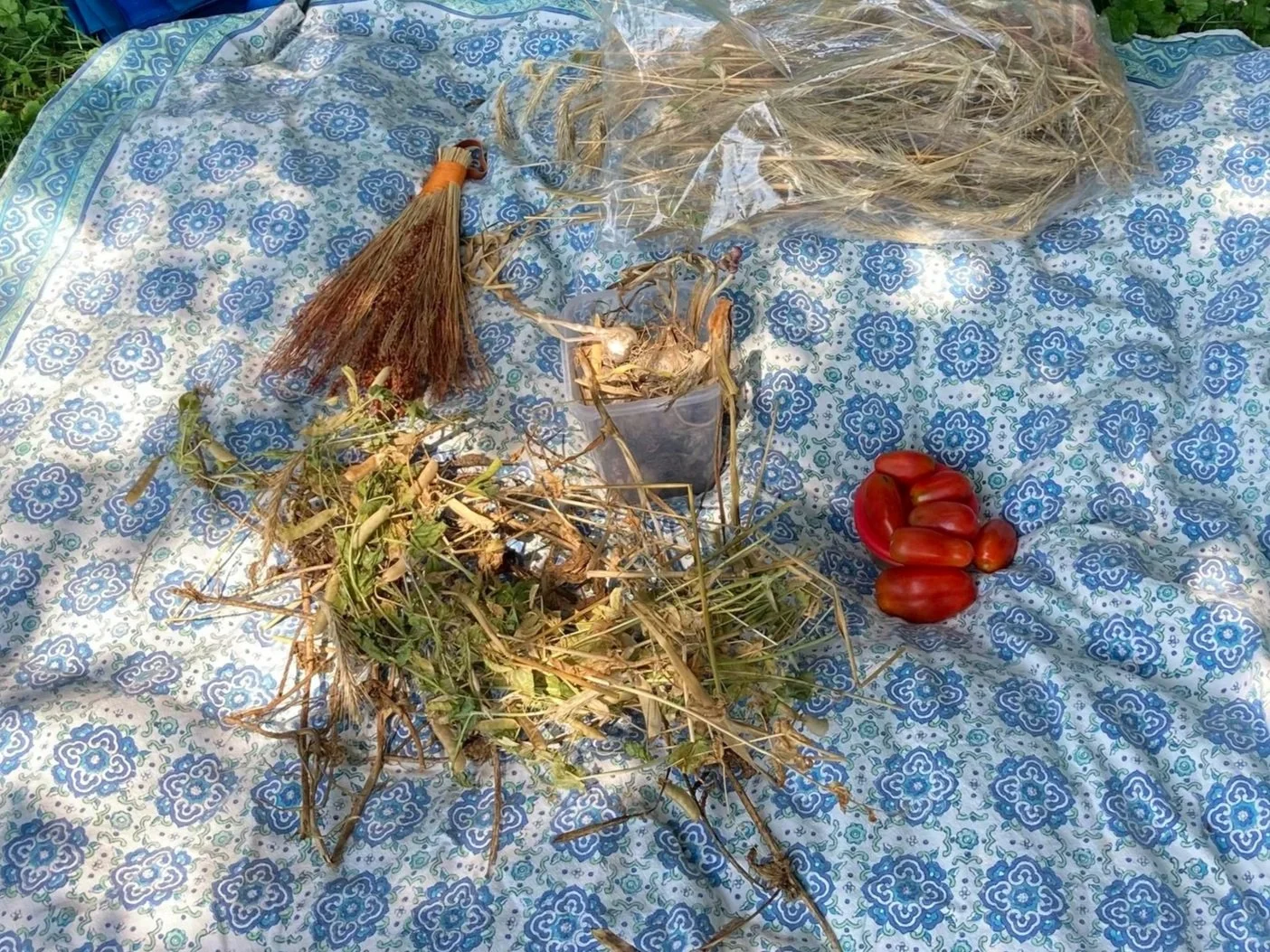
Seed Saving
We grow all open-pollinated varieties of plants and practice seed saving techniques to support developing climate adaptive varieties of plants for your garden.
-
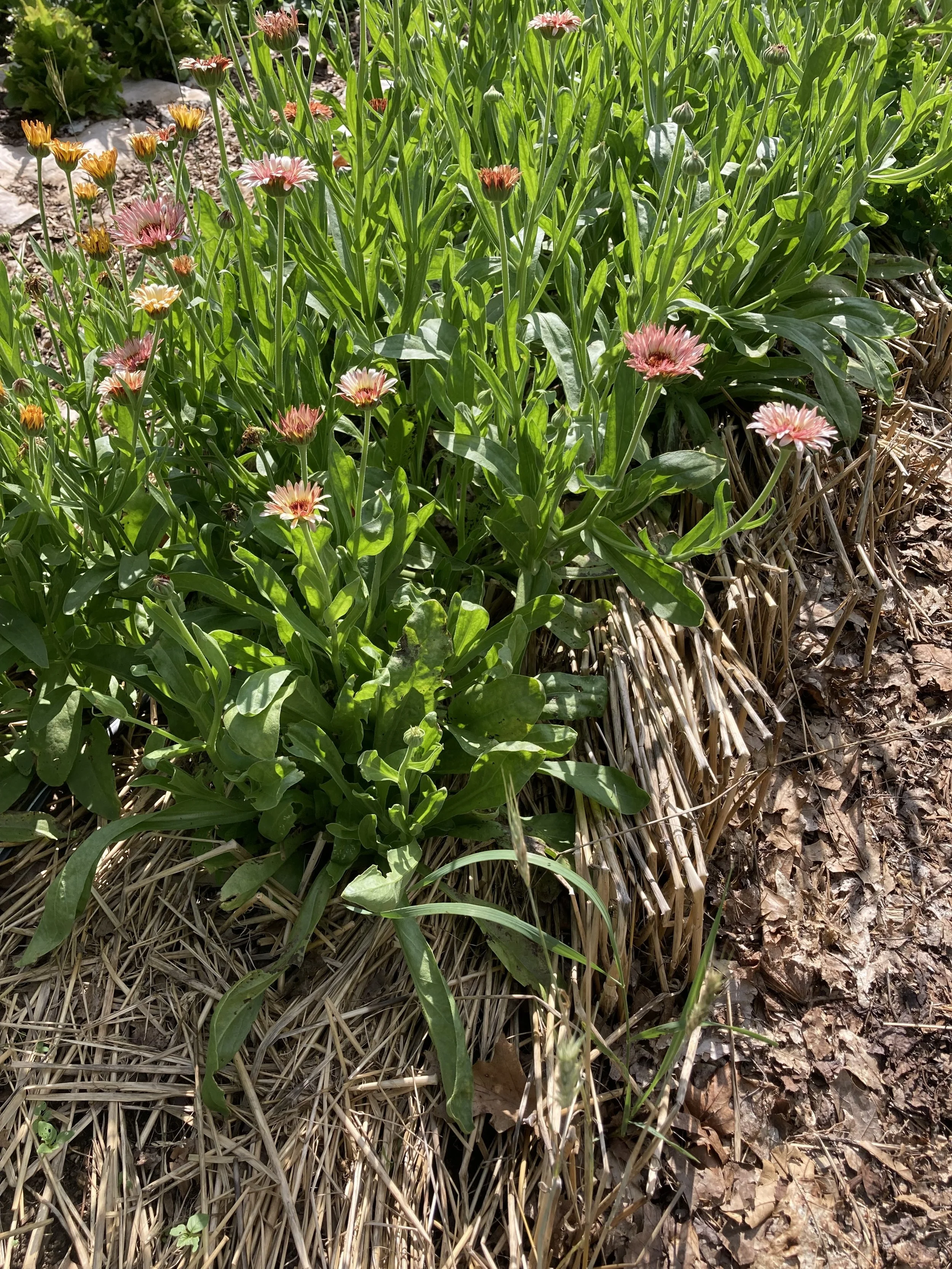
Crimping cover crop
We grow cover crop and crimp it to create an in-place mulch, through which we transplant crops.
-
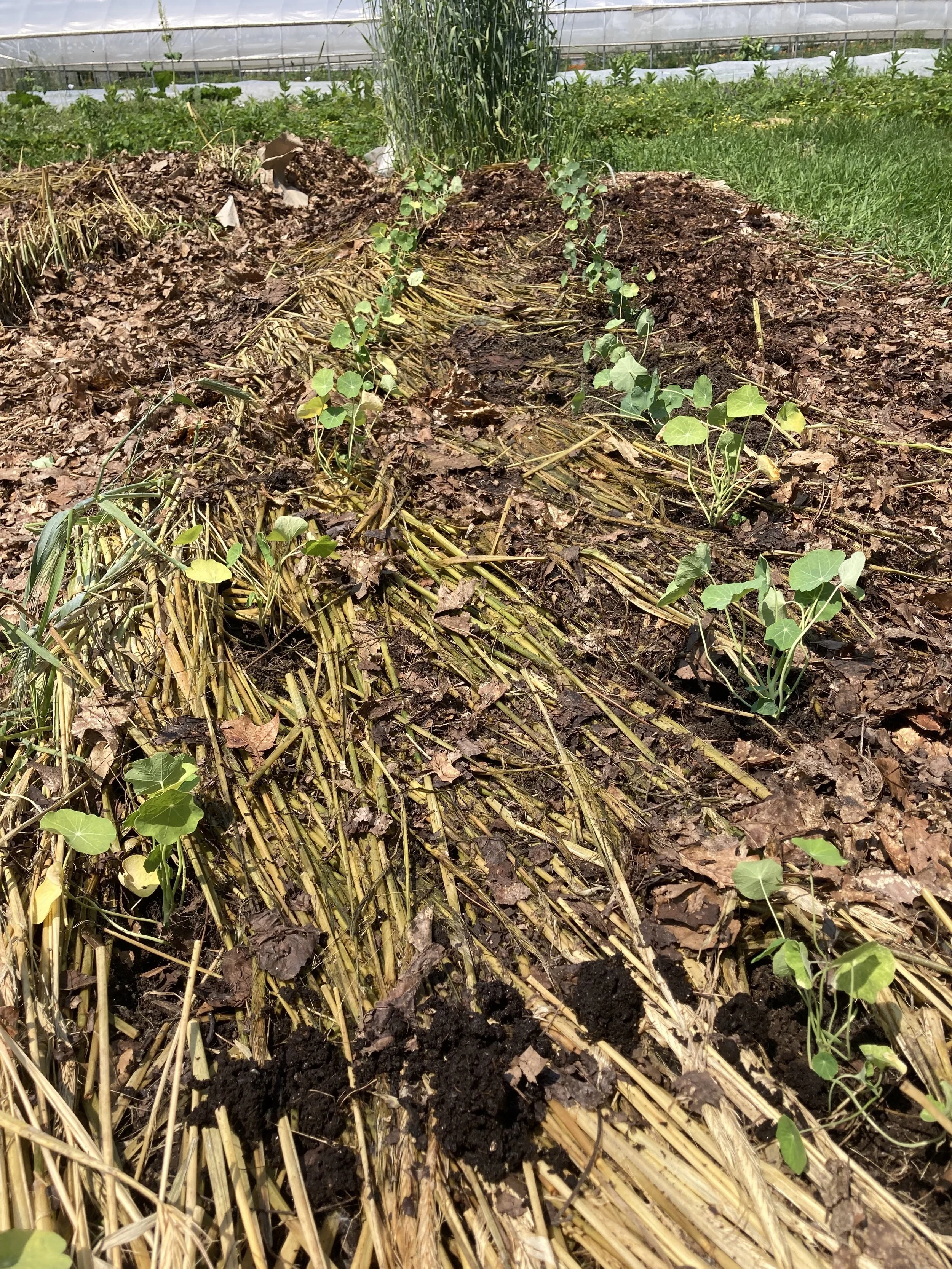
Mulch
We leave the soil covered at all times, using mulches such as straw, leaves, cardboard, and mulches grown in place.
-
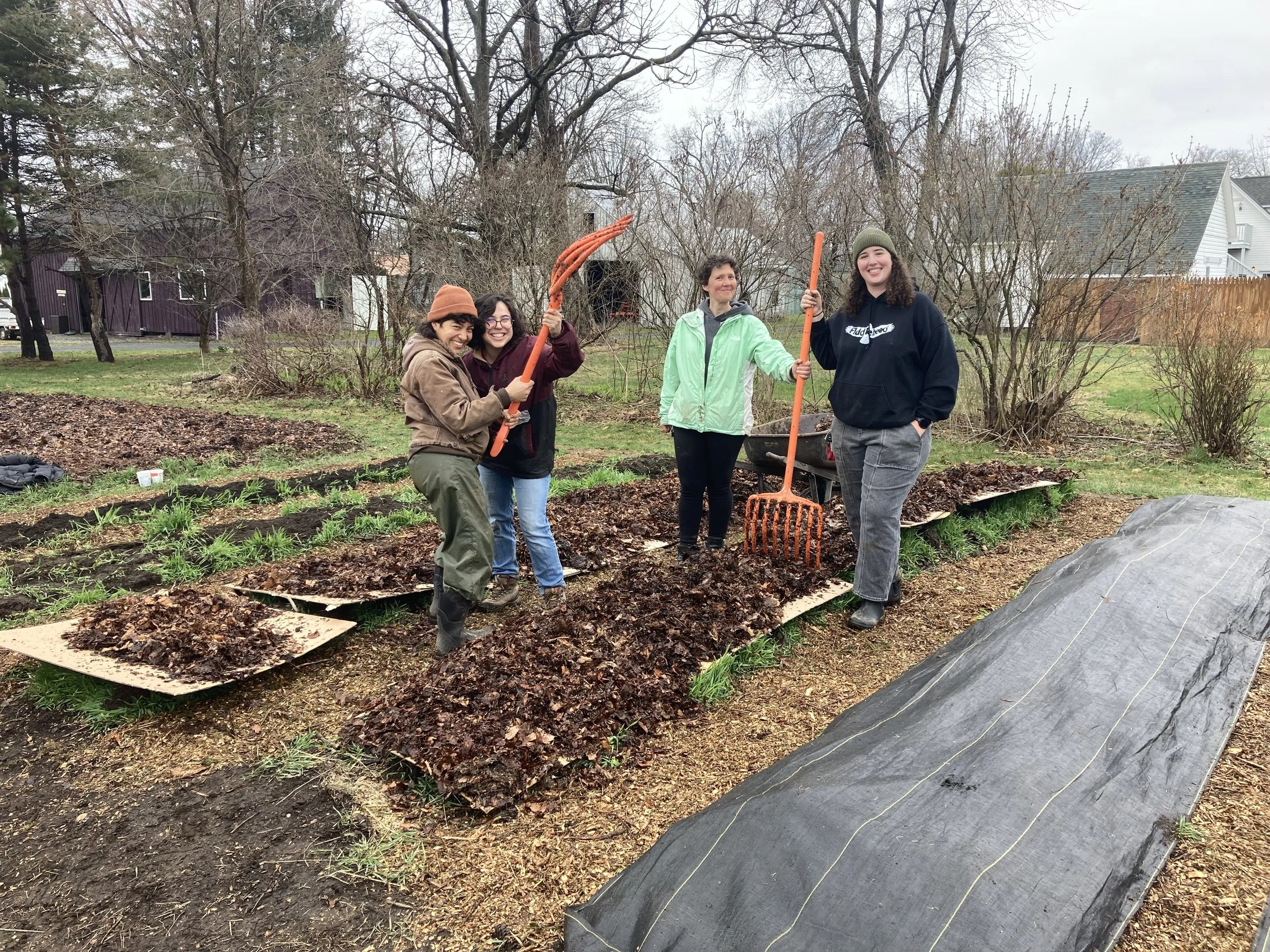
Raised Beds and Permanent Pathways
We raise our beds to encourage drainage in the face of heavy rains and mulch our pathways with wood chips, adding fungal life and suppressing weeds.